Early-Warning Systems for Farms & Animal Facilities
Sensors and alarms that flag smoke, fire risk, flooding, extreme temperatures, water leaks and power or equipment failure early, so people can act before animals or property are harmed.
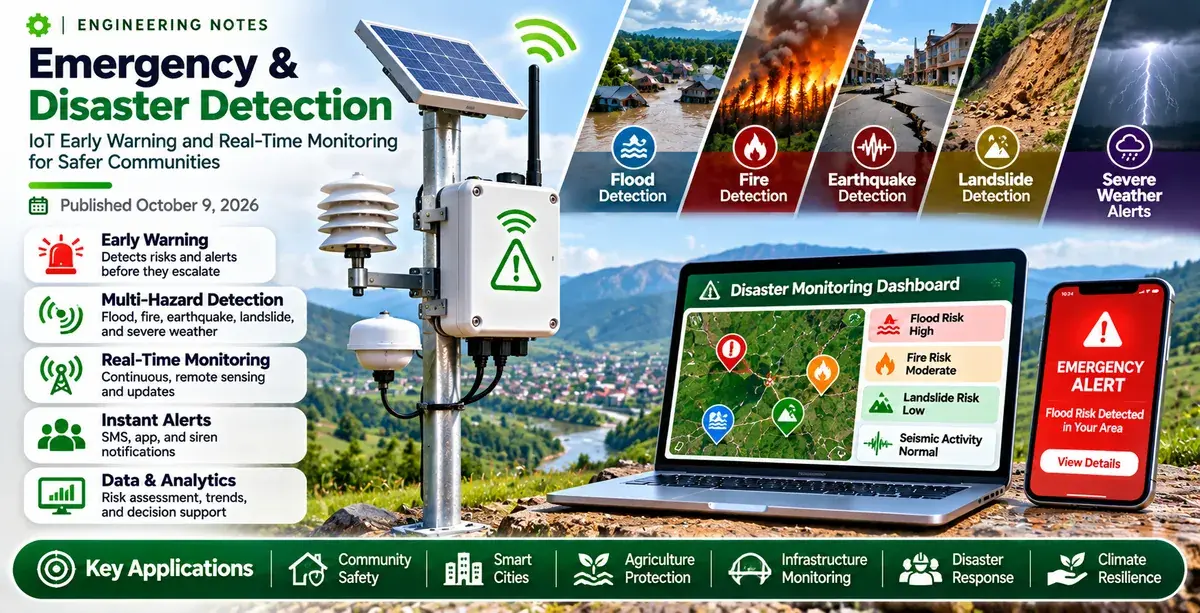
What the system can detect
Emergencies an Early-Warning System Can Catch
On a farm, a failed fan, an empty water line or a small fire can harm many animals within hours, often at night. Early-warning systems are designed to notice first and make sure someone hears about it.
Ventilation & power failure
In closed poultry and pig houses, a power cut or failed fan can quickly lead to dangerous heat. Power, fan and temperature monitoring with a battery-backed alarm gives staff time to respond.
Smoke & fire risk
Smoke and heat sensors in barns, hay stores and feed rooms, plus temperature monitoring of motors and electrical panels, can flag fire risk before flames spread.
Flooding & water leaks
Water-level sensors in low-lying buildings and near rivers, and flow monitoring on supply lines, warn of rising water and burst pipes.
Extreme heat & cold
Temperature and humidity thresholds for heat stress or frost risk, including frozen water lines that can leave animals without water.
Equipment failure
Pumps, generators, chillers and feed systems monitored for current, run time and faults, so a stopped machine is noticed quickly.
Escalating alarms
Warning and critical levels, with local sirens, SMS, calls and app alerts that escalate to the next person if nobody acknowledges.
How an Early-Warning System Is Designed
An alarm system is only useful if it still works when something else has failed. Redundancy and fallback paths are designed in from the start. These are the parts we work through with you.
Sensor stations
Smoke, heat, water-level, power and equipment sensors placed where risks are highest, built for dust, moisture and outdoor exposure.
Independent power
Battery and solar backup so detection and alarms keep running through the power cut they are warning about.
Redundant alert paths
More than one way to reach people, such as cellular and LoRaWAN, plus a local siren that works without any network.
Alarm logic
Normal, warning and critical states, delays to avoid false alarms, and escalation rules for who is contacted and when.
Testing & self-checks
Regular self-tests of sensors, batteries and communication, with an alert when part of the system stops reporting.
Engineering trade-offs
Sensitivity vs. false alarms
An alarm that sounds too often gets ignored. Delays, confirmation from a second sensor and sensible thresholds keep alarms trustworthy.
Cellular vs. LoRaWAN vs. local siren
Cellular reaches phones directly; LoRaWAN covers a site cheaply; a siren works with no network. Critical sites usually combine them.
Battery backup size vs. cost
Longer backup costs more and adds size. The backup is sized by how long an outage must be covered before someone arrives.
Standalone vs. integrated
A standalone system keeps working if other farm systems fail; integration with climate controllers adds context but adds dependencies.
Information that helps us scope a project
- The emergencies you are most concerned about
- Buildings, animals and equipment to protect
- Mobile coverage and internet on site
- Existing alarms, controllers or generators
- Who should be alerted, in what order
- How quickly someone can reach the site
Related pages and articles
This section describes custom engineering services. An early-warning system supports, but does not replace, certified fire alarms and local safety regulations. Reference designs on our Projects page are concepts and prototypes, not products available to purchase.
Common questions
What can a farm early-warning system detect?
Typical systems watch for smoke and fire risk, ventilation and power failure, extreme heat or cold, flooding and water leaks, and pump, generator or equipment faults, and alert people by siren, SMS, call or app.
Will the alarm still work during a power cut?
It should, and we design for it. Sensors, controller and communication run on battery or solar backup, and a local siren can sound even if the internet and mobile network are down.
How do you avoid false alarms?
With sensible thresholds, short delays before alarming, confirmation from a second sensor where it matters, and separate warning and critical levels. Thresholds are tuned during a pilot installation.
Does this replace a certified fire alarm?
No. An early-warning system adds monitoring that fire alarms don't cover, such as ventilation, water and equipment failure. Certified fire detection required by local regulations should stay in place.
Who receives the alerts?
You decide. Alerts can go to several people in order, escalating to the next person if nobody acknowledges within a set time.
Need an Early-Warning System for Your Site?
We'll design sensors, backup power and alarm paths around the risks, buildings and animals you need to protect.